In my media strategy advisory work with local business owners, I regularly see companies fall into what I call the "lead aggregator trap." Service businesses—from HVAC and roofing contractors to dental practices and law firms—often come to me exhausted by the cycle of buying shared leads from third-party broker platforms. On the surface, paying $35 to $60 for an immediate customer inquiry seems like a low-risk shortcut to growth.
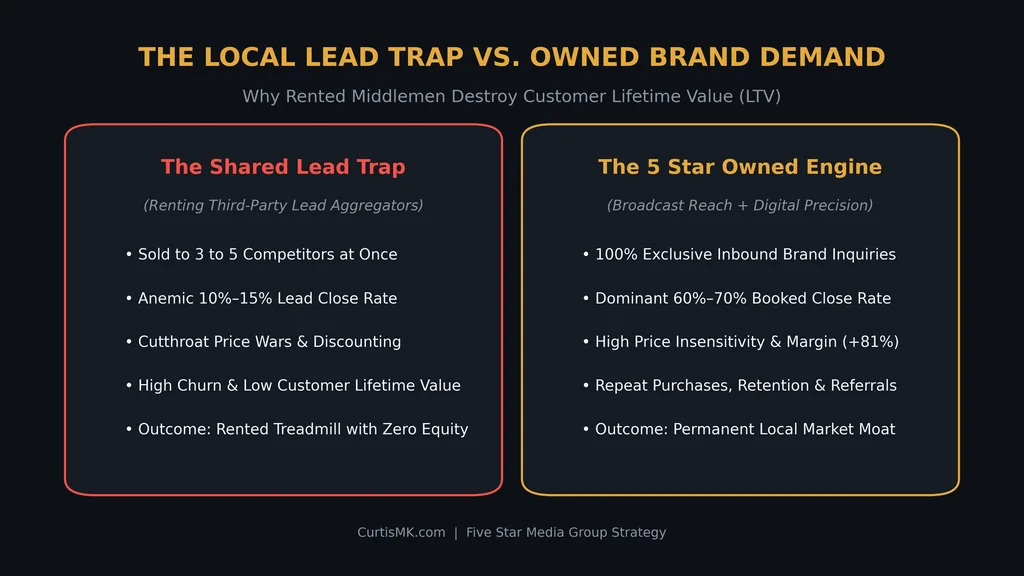
The underlying economic reality tells a very different story. When you buy shared leads from an aggregator, that same prospect is simultaneously sold to three to five of your direct competitors. What begins as an inquiry instantly turns into a race to the bottom, where your team is forced into frantic phone tag and cutthroat price discounting just to get a foot in the door. Even when you win the job, the customer has zero loyalty to your business—they simply picked whoever called first or offered the cheapest bid.
What the Data Reveals About Lead Quality and Customer Lifetime Value
To build a sustainable enterprise, local business owners must look beyond surface-level cost-per-lead metrics and analyze the true economic driver of business value: Customer Lifetime Value (LTV).
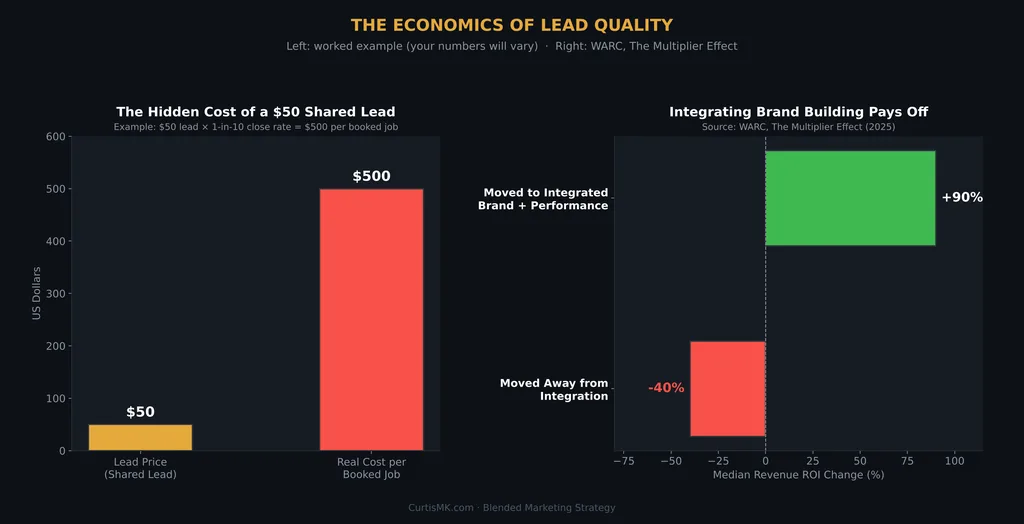
Marketing effectiveness research from WARC and the marketing science firm System1 illuminates the stark difference between rented aggregator leads and owned inbound demand:
- The Real Cost Per Booked Job: A shared lead's price tag hides its true cost. Run the math on your own numbers: if a $50 shared lead closes one time in ten, each booked job actually costs $500 before you've done any work. Exclusive inbound calls from people who already know your name close at far higher rates, which is where the real savings live.
- The Long-Term Revenue Penalty: WARC's The Multiplier Effect study, produced with Analytic Partners, System1 and others, found that organizations moving from a performance-only approach to an integrated brand-and-performance strategy saw a median revenue ROI increase of 90%, while those that moved away from integration saw a 40% ROI decline.
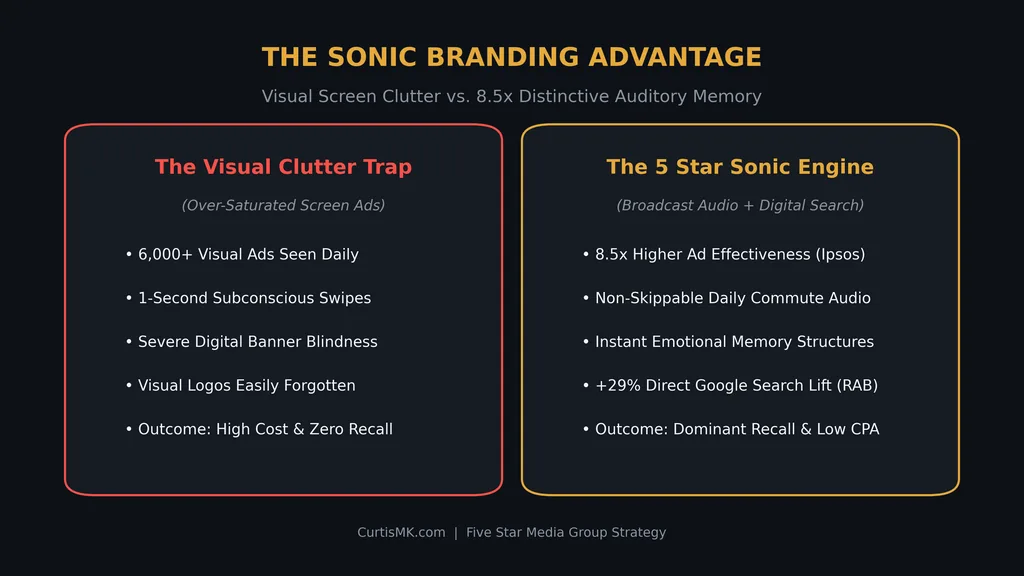
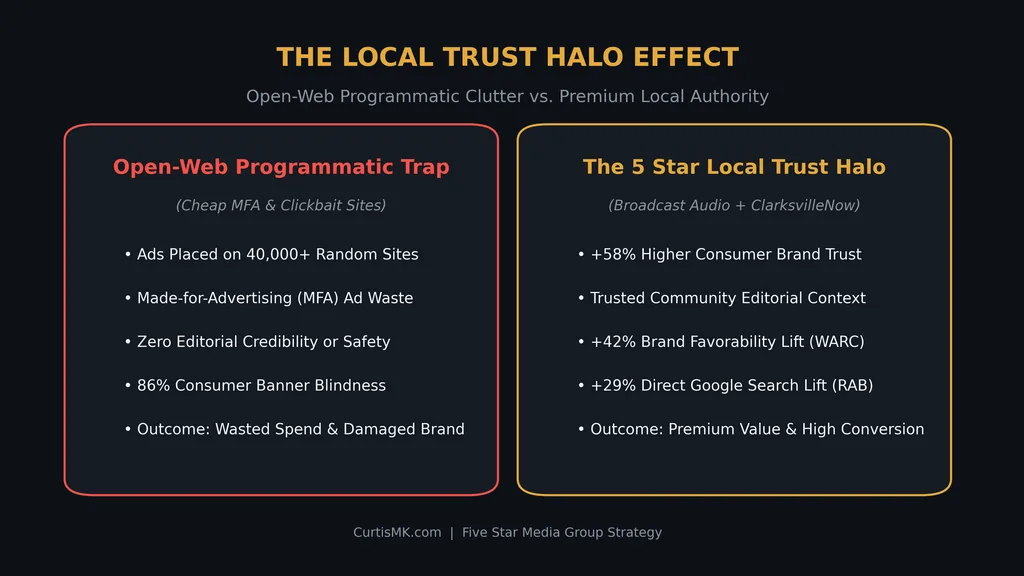
- Broadcast Audio as the Trust Catalyst: Research from the Radio Advertising Bureau (RAB) proves that local broadcast radio advertising generates an average 29% lift in direct Google search activity. When prospective buyers hear your business endorsed consistently across the airwaves, they bypass middleman aggregators and search directly for your brand name.
- PPC Efficiency for Branded Demand: Data from Semrush search economics demonstrates that branded search clicks carry higher conversion rates at a fraction of the cost-per-click of generic keyword battles, protecting your operating margins.
When you invest in building an owned brand asset within your community, you stop renting customers from tech platforms and start owning your market.
The 5 Star Framework: Transitioning from Rented Leads to an Owned Growth Engine
In my advisory work, I guide local businesses away from third-party lead brokers using Five Star Media Group's Blended Marketing Strategy / Omni-Channel Growth framework. By uniting Mass Local Reach + 1-to-1 Digital Precision, this approach builds exclusive, high-LTV inbound demand:
1. Get Wanted (Creating Demand & Local Trust)
This is where true customer loyalty begins. Utilizing Five Star Media Group's 9 local broadcast radio stations and the trusted journalistic authority of ClarksvilleNow.com, I build massive community familiarity across your trade area. By embedding your story, values, and reliability in consumers' minds before they ever experience an emergency, you become the definitive choice rather than one of five bids on an app.
2. Get Found (Capturing Active Intent)
When a consumer needs service, they don't search for an aggregator—they search for you. The "Get Found" phase captures this high-intent demand through strategic Google PPC, high-authority local SEO, and optimized Google Business Profiles. By Capturing Active Demand seeded across local media, your business captures 100% exclusive inbound calls with zero competitor interference.
3. Get Chosen (Conversion & Re-engagement)
The final pillar cements long-term customer relationships. Through Targeted Display Ads (TDA/geofencing), multi-device digital retargeting, and Connected TV (OTT), I maintain consistent visibility as clients review proposals. Because prospects already respect your market reputation, close rates soar, project tickets are protected from price cuts, and customer lifetime value expands through repeat business and referrals.
3 Actionable Steps to Escape the Lead Trap Today
- Calculate Your Effective Cost Per Booked Job: Stop evaluating leads by their initial price tag. Divide your total monthly aggregator or ad spend by your actual number of completed, paying jobs to uncover your true cost of customer acquisition.
- Shift Budget from Rented Middlemen to Owned Media: Begin reallocating ad dollars away from third-party lead brokers and into local broadcast audio and community news partnerships that build permanent brand equity.
- Turn Past Customers into a First-Party Growth Loop: Implement a structured review generation and seasonal check-in process to nurture past clients, boosting repeat purchases and turning high-retention customers into active referral advocates.
Ready to Build an Owned Growth Engine in Your Market?
Stop letting lead aggregators siphon your profits and control your customer pipeline. Connect with me today to schedule a comprehensive Client Needs Analysis (CNA) and Media Diagnostic, where we will evaluate your customer acquisition model and design a customized Blended Marketing Strategy built for lasting profitability and high customer lifetime value.